The last post is about the sport which is closest to my heart – horse riding. I have been practicing it since I was 10 years old and I have my own, great horse named Pedro. This module has inspired me to reflect on what happens with my body when I am riding, particularly on the union of bodies, gender and sensory experience in the equestrian sport.
Although I cannot express it, there is an unusual feeling of oneness with my horse, which only riders themselves can fully understand, I think. Horse riding seems very simple, but in fact, it is a very difficult task. Not only does it involve most of the human muscles and requires a very precise position of the body, but also it requires this body to correlate with a non-human partner. The union of those two bodies creates a new world or way of being (Merleau-Ponty 1962), where knowledge is transmitted through body techniques and cues instead of verbalisation. The anthropological study of equestrianism can thus prove the argument that the body is more than just an outer shell; it is a relational embodiment of knowledge that acts as a language, or means of communication (Farnell 1999), which can even cross the boundaries between species in this case.

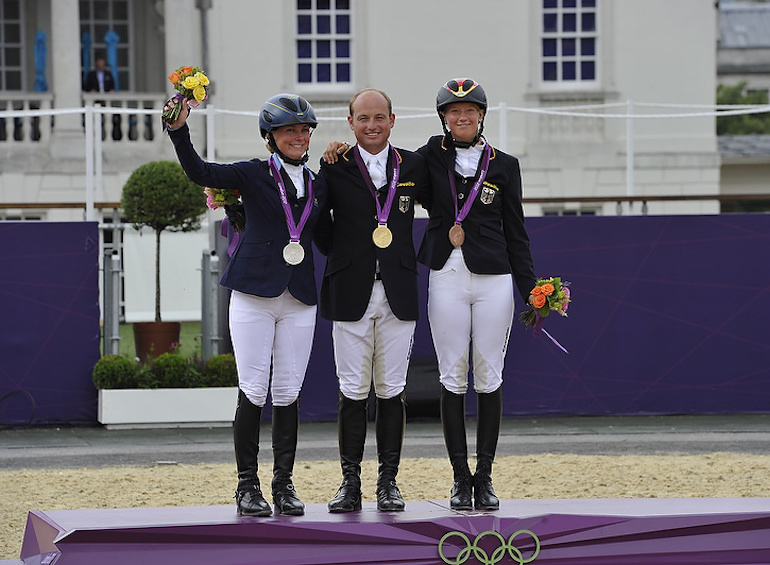
When it comes to professional horse riding, the theme of gender emerges again. Equestrianism is the only olympic sport where men and women are not separated in competition. Although it is still considered a rather feminine sport and there are more women participating in amateur-level competitions, it is actually the male riders who often win the most important ones. The gendered body somehow becomes neutralised by the presence of the horse. Unlike gender-unique sports teams (basketball, volleyball, football etc.), in horse riding, the team is composed of inter-species team members and gender becomes a non-influential factor to the performance of this team as a whole.
Finally, horse riding highlights the importance of understanding the sensory experience of the human body in healing, as shown in the study by Lee Davis (2015) on the horse therapy among women equestrians in the US. Her article involves informants’ commentaries on their feelings while riding, which prove a great healing power of human-animal encounters. The riding is shown as a transformative experience and a kind of mutual being between the rider and his horse; a corporeal synchrony and extra-sensory experience where moving together gives a feeling of oneness. The riders could not exactly express their physical experience in words, but associated it with harmony, freedom and pleasure (ibid.). As an equestrian myself, I see how this activity has a big influence on my mental and physical state and enhances my feeling of well-being. I find all of my senses engaged during the encounter with my horse and every time his smell, touch and look have a calming quality and when galloping through an open space, I feel light and without any boundaries. In the hippo-therapy, the horse muscles are used to stimulate the muscle control and coordination of the patient, which highly involves the sense of touch. Lee Davis finds that the horse’s balance and movement produce a relaxing and trance-like state in the rider and greatly reduce the stress (ibid.). The size and power of the horse are also believed to have a stimulating effect on the human nervous-system.
To summarize, horse riding is a unique sport and hence creates a unique relation with the human, but also non-human body. The presence of the latter enables a subversion of dominant gender practices, particularly at the localized (private) level, and has been proven to have positive effects on mental and physical well-being.
References:
- Farnell, B. (1999). Moving Bodies, Acting Selves. Body Movement Practice. Annual Review Anthropology, Vol. 28, pp. 341-373.
- Lee Davis, D. et al. (2015). My Horse Is My Therapist: The Medicalization of Pleasure among Women Equestrians. Medical Anthropology Quarterly, Vol. 29 (3), pp. 298-315.
- Merleau-Ponty, M. (1962). Phenomenology of Perception. C. Smith (translator). Routledge & Kegan Paul.

 The Body in sports