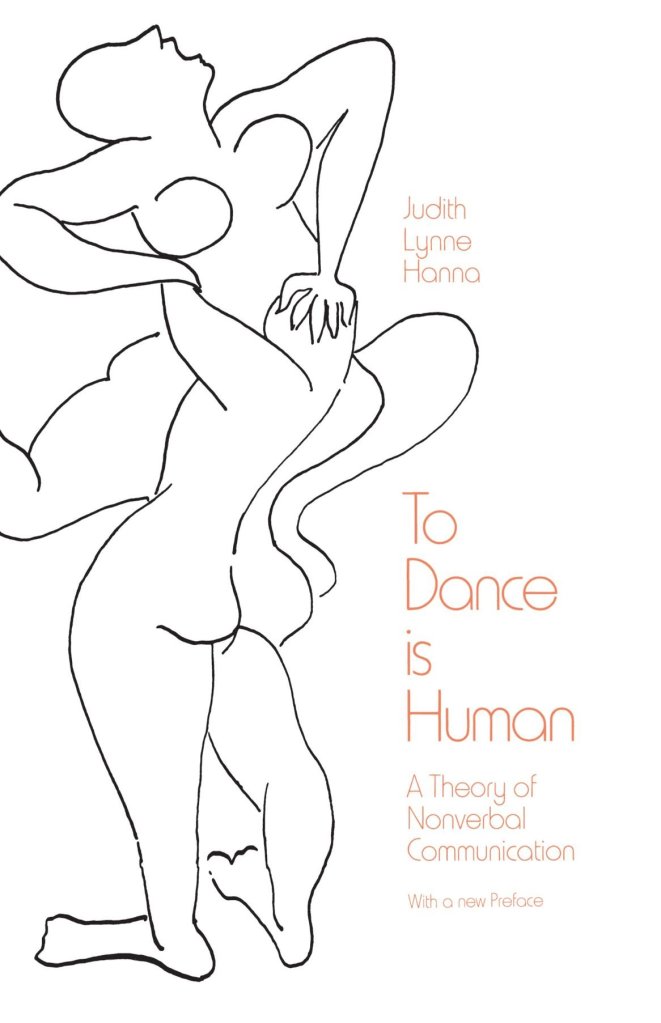
Although, out of the four disciplines that I am going to discuss, dance is the one that I have the least experience with, I think it is intrinsically linked with the human body and its movement, and that „To Dance is Human”, as Judith Hanna (1987) said.
According to Farnell (1999), there has been a paradigmatic shift in anthropological studies of the human movement, which she defines as a “dynamically embodied action in semantically rich spaces”, or in other words, a “talk from the body”, which complements the earlier talks “about the body” (as a cultural object) and “of the body” (as a phenomenological realm of subjective experience). Indeed, dance is human because it is embodied, it is innate. It is our Maussian (1979) “bodily technique” (the ways in which from society to society men know how to use their bodies), or our Bourdieusian “habitus”, which has a meaning because of the specific context and social cohesion.
Dance has been long devalued, like everything that referred to the meaningless body and not to the conscious mind. Although the body is more and more often portrayed as a socio-cultural entity rather than a purely biological object, it still remains separate from the mind (Farnell 1999), reinforcing the Cartesian dualism. Yet, it is the most natural and unspoiled form of the non-verbal communication. Blacking (1983) highlights the evolutionary importance of dance as a mode of communication, implied by the fact that it has not been superseded by the verbal language. In spite of the latter being generally more efficient, “the universality and survival of dance suggest that it cannot be abandoned without danger to human species” (ibid.: 89). The problem of relating movement to meaning has encouraged the usage of linguistic analogies by many scholars and making distinctions between the Saussurian langue and parole, or the code and the message.
Dance is ultimately about action and conscious human intentions, as moving and giving it meaning are at the core of the dance experience. The important thing to remember is that this meaning can only be understood in a specific context of use and the conceptual worlds of its users. Hence, this requires that dance be studied cross-culturally through the everyday languages of different cultures.
The variety of dances can be considered a great human achievement (ibid.). For example, in the South African Venda society, the Domba dance represents a symbolic rebirth of the community and it produces a trance-like state in the performers.

Hanna (1987) shows how the concept of dance, not necessarily a particular dancer’s or group’s definition, opens a cross-cultural discussion, particularly important in our multicultural world. Describing the physical actions of dance, like transcribing speech, is a first step in studying dance, and making sense of these movements (like the literary analysis) is the next.
Although dance is also closely linked with music, in one of the lectures we have seen a video of synchronic dance from the documentary “Samsara”, which showed the great power of human cooperation in performance and how, interestingly, those who are deaf can also perform this activity. Thus, do we really need music to dance?
Blacking (1983) argues that dance is similar to music, as it is a social fact born out of sociobiology, embedded in human behaviour (not invented), but still, music and dance have their own (socio-cultural) terms. Dance is also a social institution, as it is a way to express the feelings and “no matter how individual the inner world of a dancer may be, the feelings are culturally encoded as they are brought to action as dance” (ibid.: 95). This also implies that dance produces affect, which is emotion and the body movement and it is a deeply embodied and phenomenological experience in Marleau-Ponty’s terms (which is the individual point of view of the person experiencing the phenomenon).
Phenomenology is thus key to link motion and emotion. But emotions can also be hidden or enacted, as dance is a performance, which can even cause pain and push our body to its limits, like in the movie “Black Swan”. And although pain is acknowledged commonly, it is experienced individually and “intrinsically inexpressible” (Scarry 1987).

Yet still. EveryBODY dances.
References:
- Blacking, J. (1983). Movement and Meaning: Dance in Social Anthropological Perspective. Dance Research: The Journal of the Society for Dance Research, Vol. 1 (1), pp. 89-99.
- Farnell, B. (1999). Moving Bodies, Acting Selves. Annual Review of Anthropology, Vol. 28, pp. 341-373.
- Hanna, J. L. (1987). To Dance is Human: A Theory of Nonverbal Communication. University of Chicago Press.
- Mauss, M. (1979). Body techniques. From Mauss, Marcel, Sociology and psychology: essays, pp. 97-123, London: Routledge and Kegan Paul.
- Scarry, E. (1987). Introduction of The Body in Pain, The Making and Unmaking of the World. Oxford University Press, pp. 3-23.

 The Body in sports